
Logistics, warehousing, distribution and light-industrial workforces
Samrand guidance centres on logistics, warehousing, distribution, vehicle interaction and light-industrial work.
Samrand’s N1 location attracts logistics, distribution, warehousing, technical and light-industrial employers. MedicoWize supports these teams with occupational medicals, medical surveillance, fitness-for-work and structured escalation from nearby Midrand.
Service-area accuracy: MedicoWize is based in Midrand. Other locations describe genuine employer service coverage, not additional branch offices.

The Samrand corridor is built around movement, loading, warehousing, technical services, distribution and light industrial operations. That creates a workforce-health need centred on safety-sensitive duties, job-specific fitness, risk-based surveillance and efficient employee medicals. The node sits between Midrand and Centurion, but its occupational-health needs are distinct enough to warrant focused guidance.
Samrand guidance centres on logistics, warehousing, distribution, vehicle interaction and light-industrial work.
A useful Samrand scope defines each operational role, shift pattern and safety risk before medical delivery is planned.
Samrand sits within the Midrand–Centurion corridor and is served without implying a separate MedicoWize facility.
Choose the service by the decision required, not by geography.
Forklift operators, drivers, pickers, loaders, technicians and warehouse teams do not all have identical job demands. The employer should define the role, hazards and exposure profile before medical testing is scheduled, so the resulting fitness decision is useful and defensible.
Samrand employee medicals are particularly relevant to logistics, warehouse, transport and light-industrial teams where employers need defensible fitness and surveillance decisions tied to real job demands.

Pre-employment and baseline occupational medicals
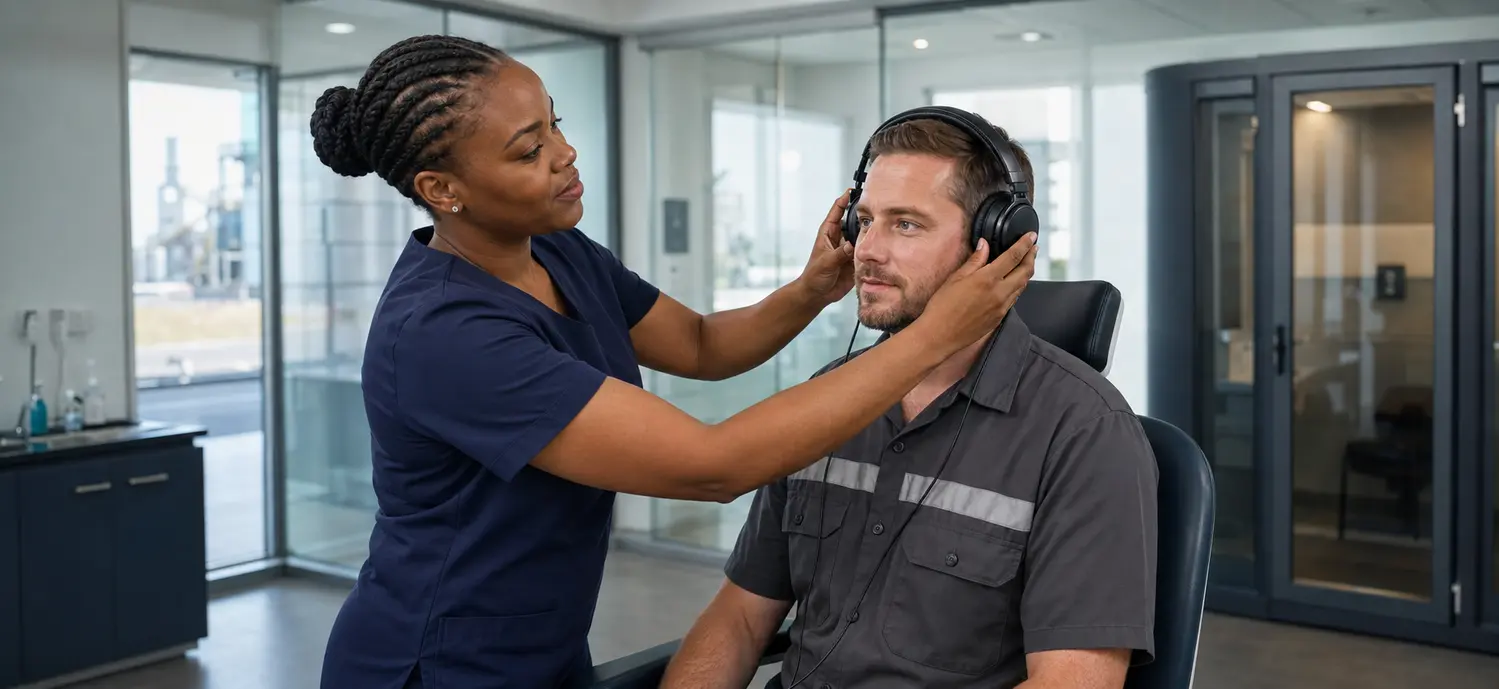
Periodic medical surveillance where exposure requires it
Safety-sensitive fitness for driving, machinery or operational roles
Exit medicals for relevant exposed employees
Logistics operations often run extended hours, shifts and time-critical processes. An employee returning after illness or injury may need restrictions that account for fatigue, physical demands, vehicle interaction or production pressure rather than a generic office-based recommendation.

Shift and fatigue-related work demands
Manual handling and mobility requirements
Safe driving or equipment-operation considerations
Phased return-to-work where needed
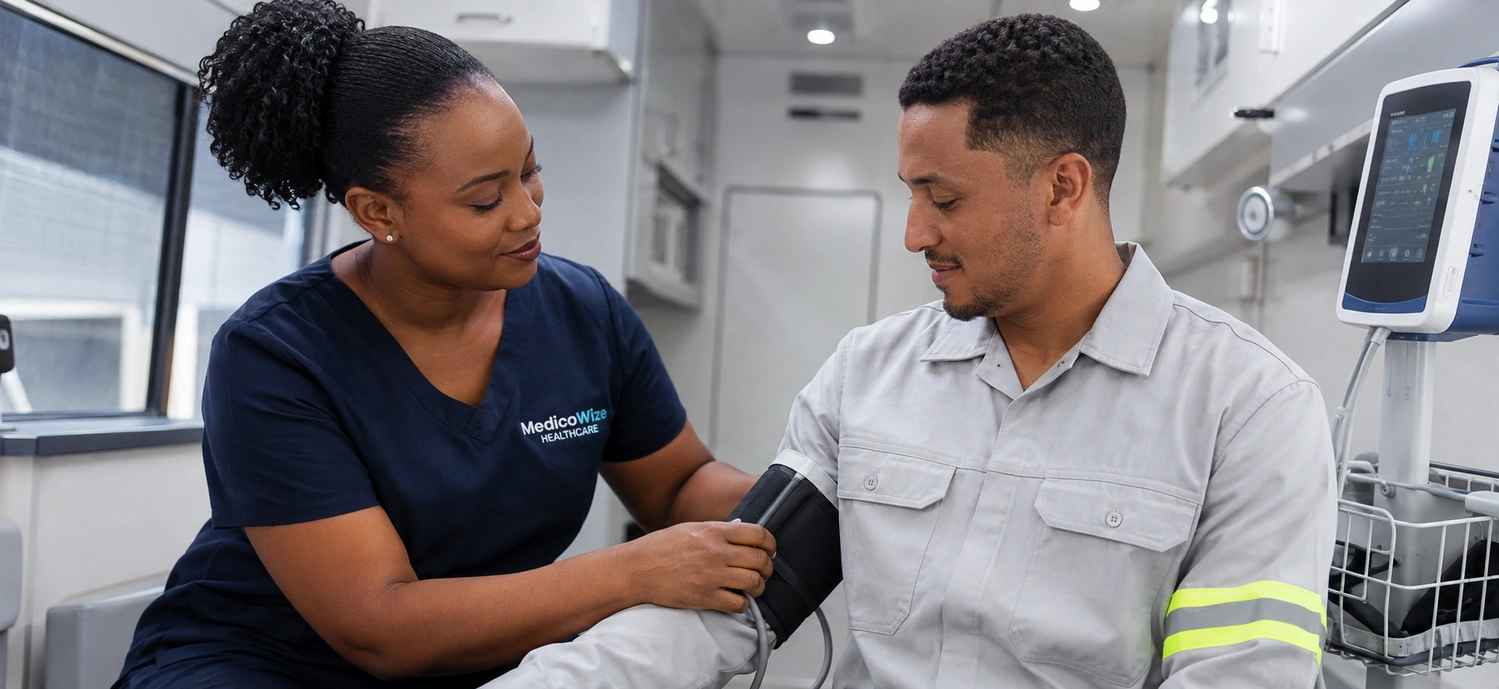
Where the scope is suitable, a mobile or on-site programme allows larger employee groups to complete relevant medicals without moving an entire shift away from the site. The programme still needs confidential data handling, quality control and a clear pathway for abnormal findings.
Workforce volume and schedule planning
Mobile/on-site pre-employment, periodic or other occupational medicals where appropriate
Private assessment environment on site
Referral of complex findings to the Midrand practice or relevant specialist pathway
New equipment, different chemicals, expanded warehousing or changes in job design can alter the exposure profile. Medical surveillance should be reviewed when the work changes rather than simply repeating last year’s schedule without checking whether it still matches the risk.
Review exposure groups when operations expand
Align tests to current risk controls
Track abnormal trends without exposing personal diagnoses
Update referral and escalation rules as the workforce changes
If an employee has persistent limitations, repeated absence, disputed work capacity or a possible occupational-causation issue, a routine medical certificate is rarely enough. The case can move into Employee Incapacity Management, Health Risk Management or Medicolegal Services depending on the employer decision required.

Persistent functional restrictions
Complex accommodation decisions
Possible occupational disease or causation questions
Independent medical evidence where appropriate
MedicoWize is based in Midrand. Samrand is treated as a focused N1 industrial and logistics node because its employer profile is materially different from nearby corporate precincts. Employers operating across the corridor can coordinate support through Midrand while also using the relevant Centurion or Pretoria pathway when their workforce spans those markets.

Primary parent market: Midrand
Regional corridor: Centurion/Pretoria
Distinct logistics and warehousing intent
No separate branch claim
These official planning and economic sources help describe the employer and workforce context in this area. They do not represent MedicoWize branch locations.
Use the parent city for broad employer needs and the focused area when its workforce, sector mix or operating environment creates meaningfully different occupational-health questions.
Published by MedicoWize Healthcare for employer decision support and service scoping. Content is designed to explain pathways, preparation and work-related decision context; it does not replace an appropriately scoped medical assessment, legal advice or an employer’s own formal decision process. Service-area content describes coverage from the Midrand base and does not represent additional branch offices.
Yes, where the number of employees, workplace environment and clinical scope make on-site delivery appropriate.
The answer depends on the risk and exposure profile and the job demands. Employers should avoid assuming that every role needs the same medical tests.
Yes, where appropriately scoped. The assessment should consider the actual safety-sensitive duties and functional requirements.
Samrand sits on the Midrand–Centurion corridor. Employers can coordinate primarily through the Midrand market while also connecting to Centurion and Pretoria.
Yes, where those examinations are appropriate to the workforce and exposure profile. A structured programme can define which employee groups need baseline or pre-employment medicals, periodic surveillance, exit medicals and safety-sensitive fitness assessment.
Plan by shift and job group, provide a private suitable area, agree expected throughput and tests in advance, and define how employees needing further assessment will be handled. Mobile delivery should support operations without weakening clinical or privacy requirements.
MedicoWize will route the enquiry to the appropriate occupational health, health risk, incapacity, medicolegal or wellness pathway and confirm the scope required.