
The employment medical lifecycle
Pre-employment or baseline, periodic, fitness and exit medicals should be selected by role and risk.
MedicoWize provides employer-requested occupational medicals that connect relevant clinical assessment to job demands, workplace risk and a clear fitness outcome. The scope can cover entry, periodic review, role change and exit while remaining part of MedicoWize’s broader Occupational Health service.

Employers may use terms such as employee medicals, company medicals or medicals for work when they need evidence that a person is medically suited to a role or that a workforce-health obligation is being managed responsibly. The useful starting point is the job and its risk profile. MedicoWize scopes occupational medical examinations around the work to be performed, the relevant exposure or safety considerations and the outcome the employer needs, while protecting employee confidentiality and avoiding unnecessary testing.
Pre-employment or baseline, periodic, fitness and exit medicals should be selected by role and risk.
The medical should answer a work question, not operate as a generic health screen.
Use the complete Occupational Health service when the employer needs a coordinated programme rather than one examination pathway.
The phrase occupational medicals covers several different moments in employment. A new employee may need a baseline or pre-employment assessment; an existing employee may require periodic surveillance because of workplace exposure; a role change may create new fitness requirements; illness or injury may require a separate work-capacity review; and an exit examination may close the occupational-health record. Treating these as one undifferentiated annual medical can miss the purpose of each assessment.
MedicoWize helps employers define the assessment point first, then select the clinically relevant components. That makes the medical easier to administer and the resulting fitness decision easier for HR, SHEQ and operational teams to use.

Pre-employment or baseline occupational medicals where appropriate
Periodic or annual assessments linked to workplace risk
Role-change and safety-sensitive fitness review
Exit medical examinations where required by the programme
Escalation to return-to-work or incapacity pathways when the question changes
A warehouse employee, professional driver, construction worker, office-based employee and person working at height do not necessarily present the same occupational-health question. The employer should provide enough information about essential duties, physical and cognitive demands, workplace exposures and safety implications for the clinician to determine what is relevant. A job-focused approach also reduces the risk of collecting medical information that does not help answer the work decision.
Where a formal risk assessment or exposure profile exists, it can help align the medical with the hazards that matter. The clinical scope should remain proportionate to the role and any applicable workplace requirements rather than becoming a one-size-fits-all package.

Essential duties and critical job demands
Known occupational exposures and control measures
Safety-sensitive or regulated work activities
Reason for referral and decision required
Previous restrictions or relevant occupational-health history where lawfully available
An occupational medical gathers and interprets relevant health information. A fitness-for-work decision applies that information to the actual role, its risks and functional demands. An employee can have a medical condition and still be fit for work, or may require restrictions, accommodation or further assessment before a safe decision can be made. Employers therefore need a clear work-related outcome rather than a raw collection of clinical results.
MedicoWize keeps this distinction visible so managers receive practical guidance while private medical detail remains appropriately protected. Where a case becomes complex or long-term, the matter can move into a structured incapacity or return-to-work pathway instead of being forced into a routine medical format.

Fit, fit with restrictions or further review where clinically appropriate
Role-specific functional implications
Clear review timing when a temporary restriction applies
Confidential handling of detailed clinical information
Escalation when sustained incapacity becomes the real decision
Employers may encounter common occupational-health tests such as audiometry, spirometry, vision screening or other relevant assessments. The correct combination depends on the employee’s work, exposure profile, applicable regulatory or industry requirements and clinical judgement. The assessment should explain why each component is relevant instead of applying every available test to every employee.
This risk-based approach supports better quality and avoids turning occupational medicals into a commodity bundle. It also creates a clearer record of why a particular assessment was performed and how the result relates to the employee’s work.
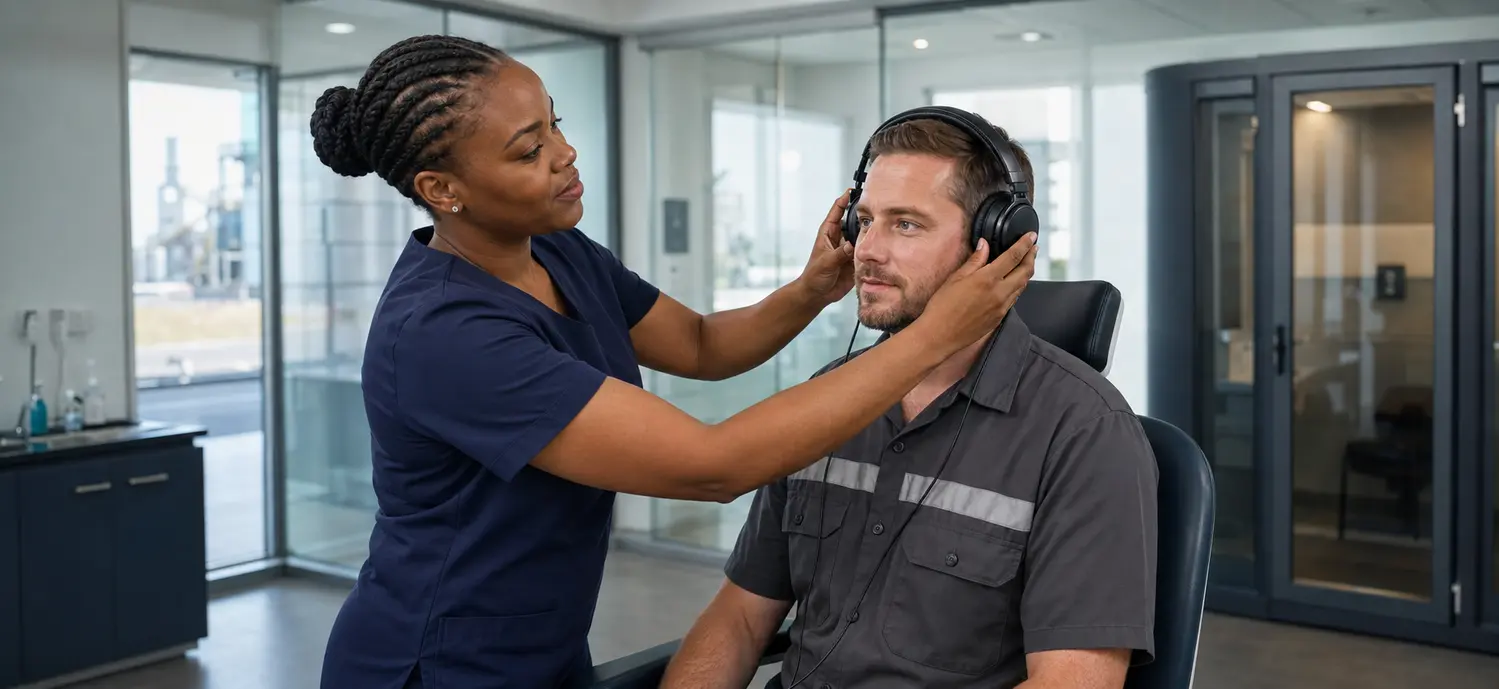
Relevant clinical history and physical assessment
Exposure-linked screening where indicated
Functional or role-specific review where required
Appropriate supporting tests based on risk
A documented fitness outcome suited to the referral question
The employer normally needs the work-related outcome: whether the employee is medically fit for the role, whether restrictions or accommodation should be considered, whether review is required and whether the occupational-health programme needs further action. Detailed personal medical information should not be distributed simply because the examination was employer-requested. A disciplined reporting pathway protects trust while still giving the organisation enough information to act safely.
MedicoWize structures employer-facing communication around the decision that must be made. Clinical records and supporting health information remain handled through appropriate professional and confidentiality processes.

Clear fitness outcome for the role assessed
Restrictions expressed in practical work terms
Review date or escalation recommendation where relevant
Confidential separation of private clinical information
Consistent reporting across repeated workforce assessments
When an organisation has many employees, several sites or recurring onboarding, the challenge is operational as well as clinical. A useful programme defines who needs which assessment, where it will be delivered, how employees are scheduled, what information HR or SHEQ must provide, how exceptions are handled and how results are reported. That prevents the medical process from becoming a disconnected sequence of appointments.
MedicoWize can scope a practical mix of Midrand-based assessment, mobile or on-site delivery and referral where the workforce and clinical requirements justify it. The aim is consistent governance even when delivery happens across different sites or employee groups.
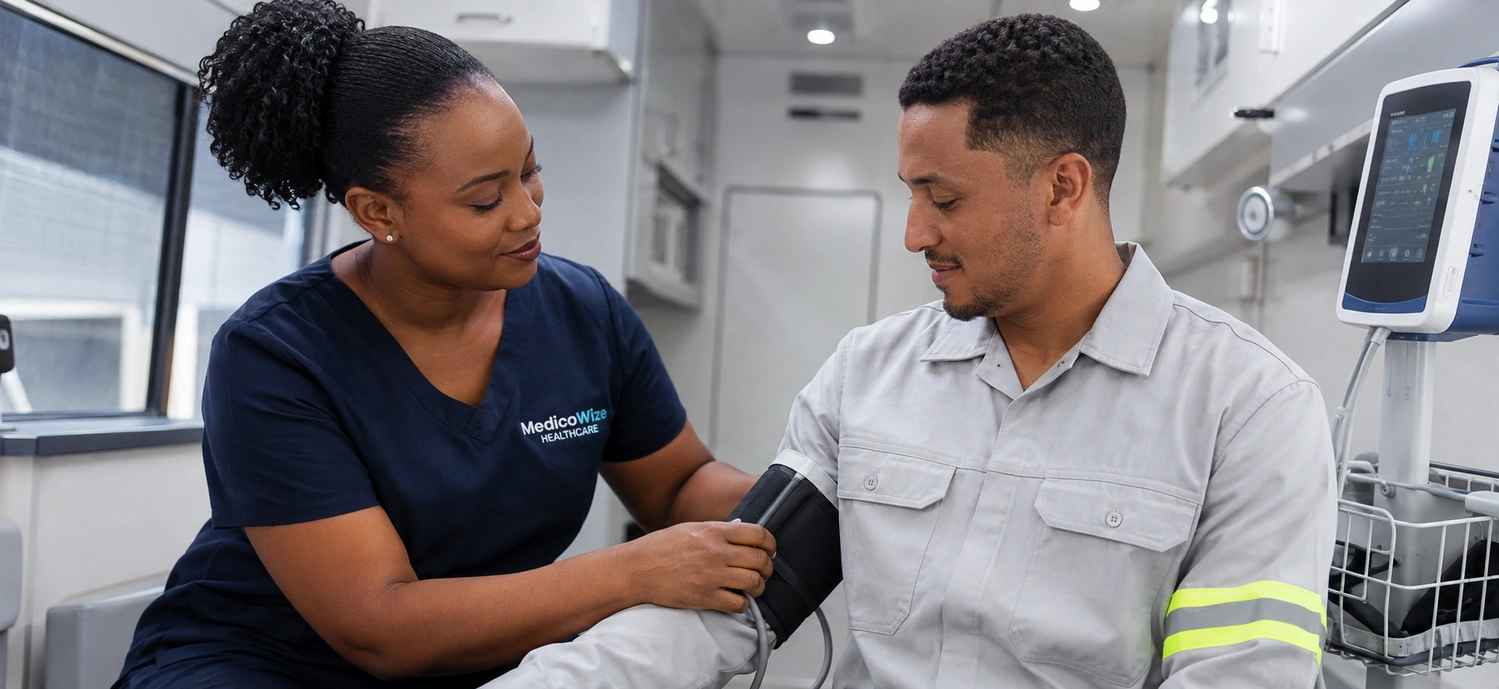
Workforce and job-risk segmentation
Assessment matrix by role or exposure group
Scheduling and employee-flow planning
On-site versus clinic-based delivery decisions
Exception handling and central clinical governance
A medical examination can answer a defined question at one point in the employment lifecycle. Employers may need a wider Occupational Health programme when the work also involves ongoing exposure surveillance, occupational disease concerns, repeated fitness decisions, return-to-work support, workplace clinics or coordinated delivery across several workforce groups.
Start with the immediate decision, then check whether the same workforce needs continuing surveillance, follow-up, escalation rules or a multi-site operating plan. MedicoWize can scope those connected requirements as one governed pathway instead of leaving the employer to coordinate disconnected appointments.

Choose Occupational Medicals when the employer needs an employee examination
Use Medical Surveillance for ongoing exposure-related programmes
Use Pre-Employment Medicals for entry and baseline intent
Use Mobile Occupational Medicals for on-site workforce delivery
Use the main Occupational Health service for the complete employer pathway
Use the options below to compare examination, surveillance, pre-employment, workplace-delivery and screening needs before requesting a scope.
Risk-based medical surveillance programmes for employers, including appropriate periodic assessment, testing, monitoring and fitness guidance.
Explore → Focused Occupational Health serviceRole-appropriate pre-employment, pre-placement and baseline medical assessments for employers requiring clear, defensible fitness outcomes. Clear, practical.
Explore → Focused Occupational Health serviceOn-site occupational medicals and workplace testing delivered around shifts, sites and workforce needs with minimal operational disruption. Clear, practical.
Explore → Focused Occupational Health serviceRisk-based occupational health screening for employers, including relevant hearing, lung-function and vision tests within a governed medical pathway.
Explore →If the need extends beyond this assessment or guide, review the complete Occupational Health service to coordinate workforce groups, clinical requirements, delivery and follow-up.
These links provide statutory, regulatory or professional context. They do not replace case-specific legal or medical advice.
Published by MedicoWize Healthcare for employer decision support and service scoping. Content is designed to explain pathways, preparation and work-related decision context; it does not replace an appropriately scoped medical assessment, legal advice or an employer’s own formal decision process.
The components depend on the role, workplace risk, exposure profile, applicable requirements and the decision needed. The assessment may include relevant history, examination and risk-based screening or testing. MedicoWize scopes the medical around the work rather than applying the same test bundle to every employee.
A pre-employment or baseline medical is one type of occupational medical performed around entry into a role. Occupational medicals can also include periodic assessments, role-change review, fitness-related examinations and exit medicals where appropriate.
Where the assessment and role information support a fitness decision, the employer can receive an appropriate work-related outcome and any relevant restrictions or review guidance, while detailed clinical information remains confidential.
No. The scope and frequency should be determined by the work, relevant exposure or risk, applicable requirements and the occupational-health programme. A generic annual test package may not answer the real workplace question.
Yes, where the workforce size, site conditions, assessment scope and clinical requirements make mobile or on-site delivery appropriate. Some assessments or exceptions may still require clinic-based or referral support.
Use MedicoWize’s complete Occupational Health service for the wider employer pathway, including surveillance, fitness-for-work, return-to-work, occupational disease support, workplace clinics and programme design.
MedicoWize will route the enquiry to the appropriate occupational health, health risk, incapacity, medicolegal or wellness pathway and confirm the scope required.