
Defined exposure and risk groups
Surveillance follows workplace hazard and exposure logic rather than a one-size-fits-all annual medical.
MedicoWize helps employers structure medical surveillance around identified workplace risk, appropriate baseline and periodic assessment, clinically relevant trends and clear escalation. The programme sits within the broader Occupational Health service and should be designed as a system, not a recurring calendar appointment.
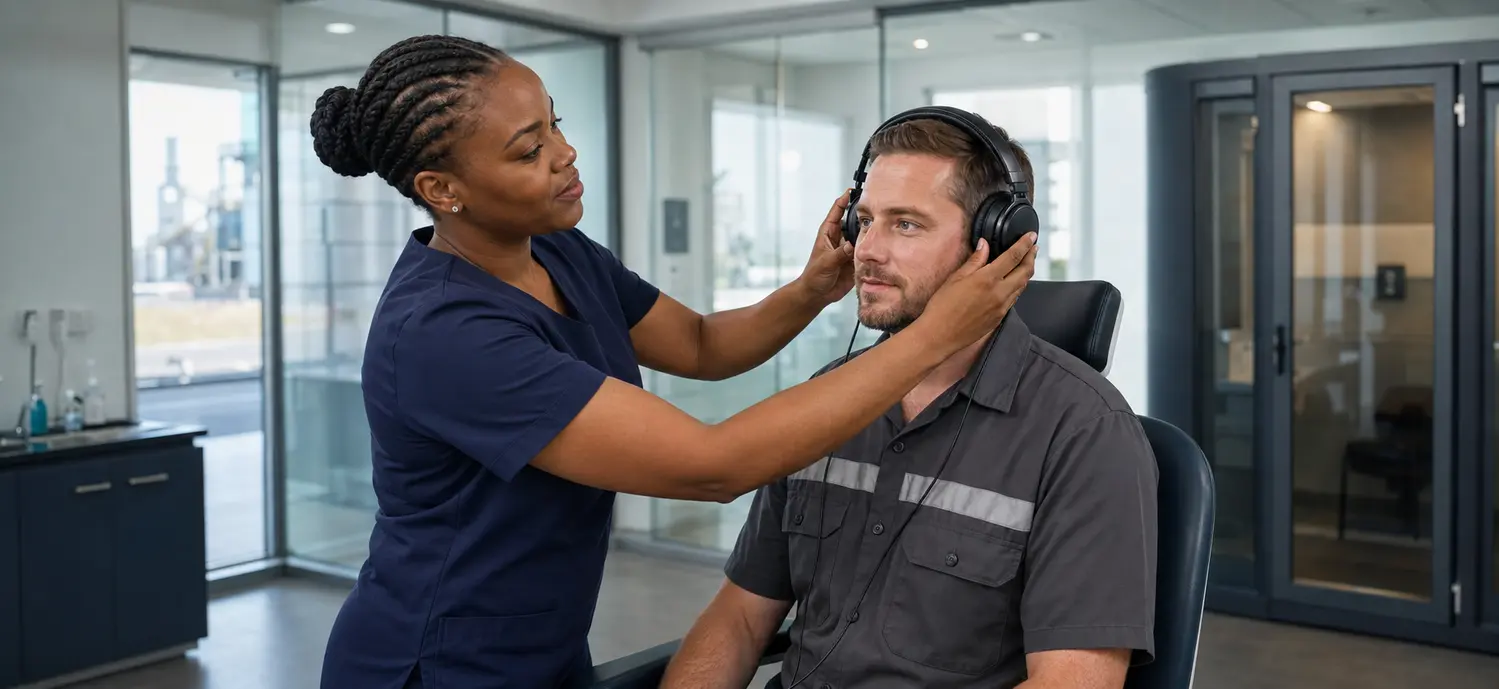
A surveillance programme exists to detect relevant changes in employee health in relation to workplace hazards, exposures or specific occupational risks. That requires more than repeating the same tests every year. The employer needs a defined population, a reason for surveillance, an appropriate clinical and testing schedule, a way to review findings over time and a process for responding when results indicate concern. MedicoWize supports employers with this structured approach while keeping individual medical information confidential.
Surveillance follows workplace hazard and exposure logic rather than a one-size-fits-all annual medical.
A coherent record is more useful than disconnected tests when occupational exposure is being monitored.
Use the complete Occupational Health service when surveillance must connect with other workforce-health decisions and delivery.
The first question is not which test to buy. It is which employees are exposed to a hazard or work condition that makes health surveillance appropriate, and what adverse effect the programme is trying to detect or prevent. A workforce can contain several exposure groups, each requiring a different surveillance approach. Defining those groups makes the programme more clinically meaningful and easier to defend operationally.
Risk assessments, occupational hygiene information, job profiles and exposure histories can help determine which employees belong in the programme. Where the applicable regulations or an occupational medicine practitioner specify requirements, those requirements should guide the surveillance design.

Identify the relevant workplace hazard or exposure
Define the employee group that requires surveillance
Connect surveillance to risk-assessment evidence
Separate unrelated employee groups instead of testing everyone identically
Review the programme when work processes or exposures change
A baseline or initial assessment establishes relevant health information before or around exposure or role placement. Periodic surveillance looks for meaningful change over time. An exit examination can help close the employment or exposure record where required by the programme. These stages work together when they are designed around the same hazard profile and interpreted consistently.
The timing and content should reflect the applicable workplace risk, legal or industry requirements and clinical judgement. MedicoWize avoids treating frequency as a marketing promise; a surveillance interval only makes sense in the context of the hazard and programme being managed.

Baseline or initial health evaluation
Periodic review at an appropriate interval
Additional assessment when findings or exposure changes warrant it
Exit assessment where applicable
Consistent clinical records that support longitudinal review
Common occupational-health surveillance can involve hearing, respiratory, vision or other clinically appropriate assessments, but no single list applies to every workplace. The selected examination and tests should relate to the hazard, the target health effect and the purpose of monitoring. Irrelevant testing adds cost and data without necessarily improving prevention.
The 2025 Physical Agents Regulations and explanatory notes, for example, describe medical surveillance as a documented programme linked to exposure risk and include initial and periodic health examination concepts. The wider principle is consistent: surveillance should be purposeful, risk-based and overseen through appropriate occupational-health governance.

Match the assessment to the relevant target health effect
Use appropriate and reliable testing methods
Standardise repeated testing where trend comparison matters
Avoid unrelated testing that does not answer the exposure question
Escalate abnormal findings through an appropriate clinical pathway
Medical surveillance has value at two levels. The individual employee needs appropriate clinical review and a safe work-related outcome. The employer also needs to know whether the programme is showing a pattern that may require exposure prevention, control review or targeted occupational-health action. Those two levels should not be confused: population-level trend insight must not become a route for exposing private medical details.
MedicoWize can support a structured reporting cadence that gives employers useful programme information while preserving confidentiality. The goal is to turn surveillance into evidence for prevention and risk management rather than a filing exercise.

Review individual findings clinically
Track appropriate programme-level trends
Protect identifiable medical information
Escalate concerning patterns for workplace review
Use surveillance evidence to support prevention-focused decisions
A surveillance result can reveal a health concern that requires a fitness review, temporary restriction, further investigation or workplace intervention. The surveillance programme does not automatically answer every capacity question. Fitness-for-work requires the employee’s health information to be considered against the actual duties and risks of the role.
Where an employee develops a sustained or complex limitation, the matter may need formal return-to-work, Health Risk Management or Employee Incapacity Management rather than repeated surveillance testing. MedicoWize keeps these decision pathways distinct so the employer uses the right process for the question at hand.

Separate surveillance findings from final work-capacity conclusions
Use the job profile when fitness needs review
Define restrictions in practical work terms
Arrange follow-up where the clinical picture is not yet settled
Escalate long-term or complex capacity matters appropriately
Large employers can struggle when different sites use different test bundles, record formats or referral thresholds. A central surveillance framework can define exposure groups, assessment requirements, delivery methods, reporting rules and escalation criteria while allowing practical delivery to vary by site. This helps the organisation compare like with like and avoids losing clinically important history when employees move between locations.
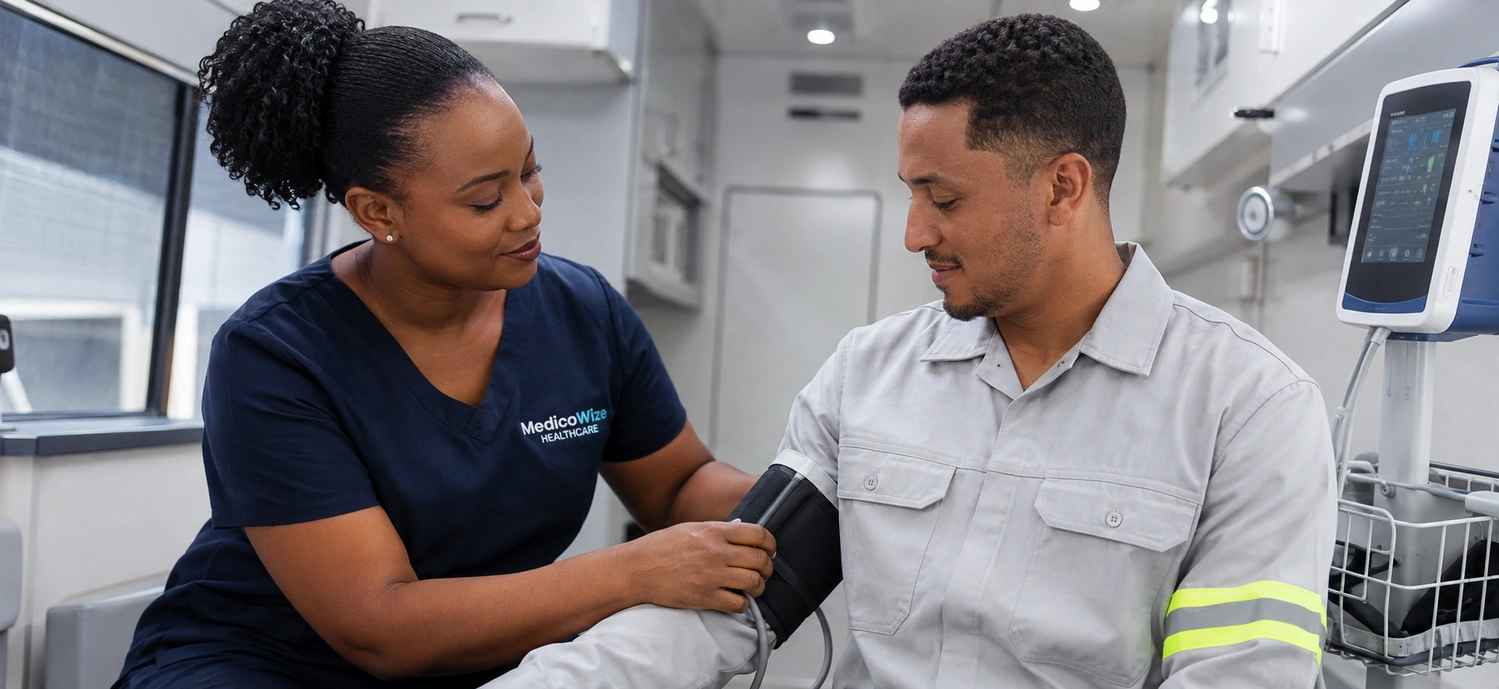
MedicoWize can scope a combination of Midrand-based assessment, mobile services and referral pathways while maintaining one programme logic. The same governance principles should apply whether the employee is assessed at a clinic or at the workplace.
Common exposure-group definitions across sites
Consistent assessment and record standards
Planned mobile or clinic-based delivery
Central exception and escalation management
Periodic programme review as risks or workforce conditions change
Surveillance is most useful when concerning findings lead to an appropriate next step. That may include individual clinical review, a role-specific fitness assessment, investigation of workplace controls, occupational disease support, return-to-work planning or a change to the surveillance programme itself. Repeating the same test without a response pathway weakens the purpose of monitoring.
Employers should define who reviews exceptions, how urgent findings are escalated, which information reaches authorised workplace decision-makers and when the broader Occupational Health or incapacity pathway takes over.

Choose Medical Surveillance for an ongoing exposure-led programme
Choose Occupational Medicals for an employee examination
Choose Pre-Employment Medicals for entry and baseline decisions
Use Mobile Occupational Medicals for on-site delivery intent
Use Occupational Health for the complete employer service pathway
Use the options below to compare examination, surveillance, pre-employment, workplace-delivery and screening needs before requesting a scope.
Risk- and role-aligned occupational medical examinations for South African employers, with clear fitness outcomes and confidential clinical handling.
Explore → Focused Occupational Health serviceRole-appropriate pre-employment, pre-placement and baseline medical assessments for employers requiring clear, defensible fitness outcomes. Clear, practical.
Explore → Focused Occupational Health serviceOn-site occupational medicals and workplace testing delivered around shifts, sites and workforce needs with minimal operational disruption. Clear, practical.
Explore → Focused Occupational Health serviceRisk-based occupational health screening for employers, including relevant hearing, lung-function and vision tests within a governed medical pathway.
Explore →If the need extends beyond this assessment or guide, review the complete Occupational Health service to coordinate workforce groups, clinical requirements, delivery and follow-up.
These links provide statutory, regulatory or professional context. They do not replace case-specific legal or medical advice.
Published by MedicoWize Healthcare for employer decision support and service scoping. Content is designed to explain pathways, preparation and work-related decision context; it does not replace an appropriately scoped medical assessment, legal advice or an employer’s own formal decision process.
Medical surveillance is a structured process for monitoring relevant employee health in relation to workplace hazards, exposures or occupational risks. It can include baseline, periodic and exit assessments, appropriate testing, clinical review, trend analysis and actions when findings indicate concern.
Not necessarily. An annual medical is simply a timing description. Medical surveillance should be linked to a defined hazard or risk, the employees who require monitoring, appropriate examination or testing and a programme for interpreting and acting on findings.
Frequency depends on the relevant workplace hazard, exposure level, applicable regulatory or industry requirements, employee risk and recommendations within the occupational-health programme. MedicoWize does not apply one generic interval to every workforce.
The employee should receive appropriate clinical review. Depending on the finding and role, the next step may involve further assessment, a fitness-for-work decision, restrictions, workplace exposure review or another occupational-health pathway.
Yes, where the workforce size, site conditions, programme design and clinical scope make on-site delivery appropriate. Some investigations or exceptions may still require clinic-based or external referral support.
Use the complete service when the organisation needs surveillance combined with occupational medicals, fitness decisions, occupational-disease support, workplace delivery or a coordinated workforce-health programme.
MedicoWize will route the enquiry to the appropriate occupational health, health risk, incapacity, medicolegal or wellness pathway and confirm the scope required.